


Portable Laptop Charger


Power Bank for Laptop
Choose Your Portable Laptop Charger by Need

65W for MacBook Air & thin laptops

100W for most work laptops

140W for power users & fast charging

GaN Wall Chargers for desk + travel setup
Laptop Power Banks

INIU Cougar Laptop Power Bank 25000mAh 140W, Fast Charging

INIU Cougar P63 Laptop Power Bank Smallest 25000mAh 100W

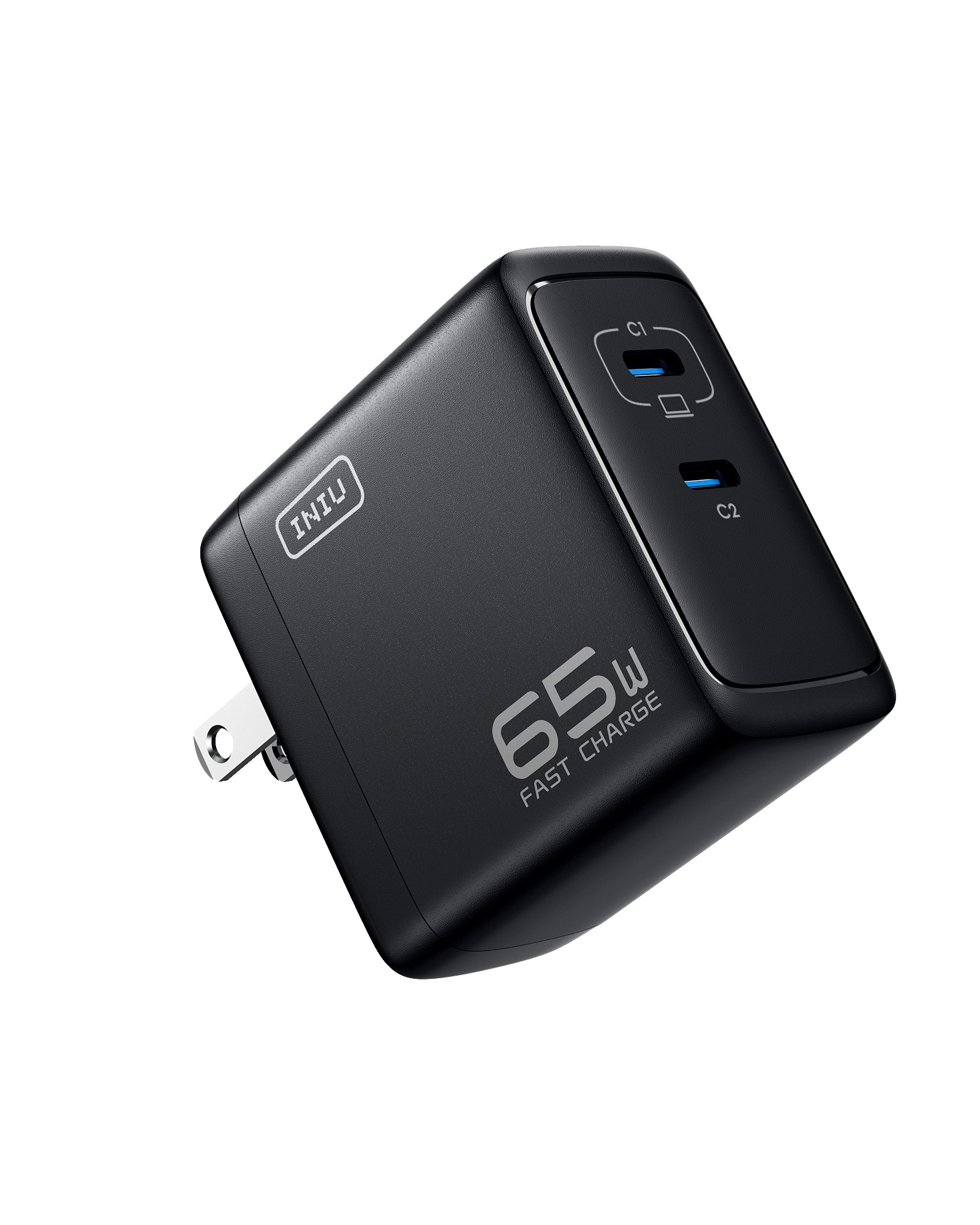
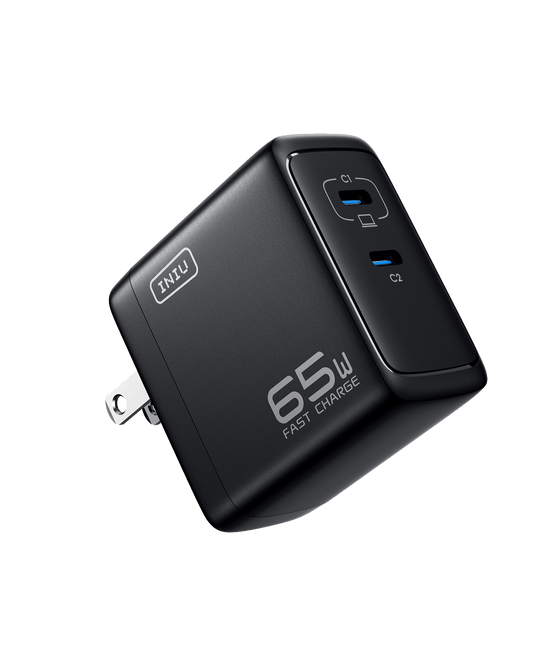
Laptop Wall Chargers

Laptop USB-C Cables

INIU D5CC 100W USB C to C Cable (6.6ft, 2-Pack)

-
Sale
-
Sale
-
Sale
-
Sale
-
Sale
-
Sold out
-
Sold out
-
Sold out
-
Sold out




Portable Laptop Charger Comparison
| Model | Type | Output | Capacity | Best For | Laptop Examples | Portability |
|---|---|---|---|---|---|---|
| P62 | Power Bank | 65W | 20000mAh | Lightweight laptops, students, daily carry | MacBook Air 13/15, Surface Laptop, Dell Inspiron 14, Lenovo Pro 14/16, etc. | High |
| P63 | Power Bank | 100W | 25000mAh | Most work laptops, business travel, balanced performance | MacBook Pro 13/14, MacBook Air 13/15, Dell XPS 14/15/16, Surface Laptop, HP EliteBook, etc. | Mid-high |
| P64 | Power Bank | 140W | 25000mAh | High-performance laptops, creators, power users | MacBook Pro 16, MacBook Pro 14, Dell XPS 16, HP Spectre x360, Lenovo ThinkBook 16, etc. | Mid |
| A11 | Wall Charger | 100W | Outlet powered | Desk setup, office charging, multi-device fast charging | MacBook Pro, MacBook Air, Dell XPS, Surface Laptop, iPad Pro, etc. | High |
| A21 | Wall Charger | 65W | Outlet powered | Compact wall charging, travel, light laptop setup | MacBook Air, Surface Laptop, Dell Inspiron, iPad Pro, tablets, etc. | High |
How to choose the right portable laptop charger
Start with your laptop’s power needs. A 65W power bank works well for MacBook Air and thin laptops, while 100W suits most work laptops like MacBook Pro 13/14 or Dell XPS. For larger laptops or heavier tasks, 140W offers faster, more stable charging.
Next, consider where you charge. Choose a power bank for travel, commuting, or working away from outlets. Choose a wall charger for desks, offices, and outlet-based charging.
Finally, balance power with portability. Higher output gives more charging headroom, but usually adds size and weight.
FAQ About Portable Laptop Charger
A 20000 mAh power bank can typically provide 0.5 to 1.5 full charges for a laptop, depending on the device.
- For smaller laptops (like ultrabooks, ~40–60Wh batteries), it may deliver about 1 to 1.5 charges
- For larger laptops (70–100Wh batteries), expect around 0.5 to 1 charge
When used as a portable laptop charger, actual performance will vary based on your laptop’s battery size, power draw, and charging efficiency.
It's generally better to charge your laptop to around 80% rather than 100%. Charging to 80% helps prolong the battery's lifespan by reducing stress on the battery, as lithium-ion batteries (commonly used in laptops) last longer when they aren't constantly fully charged.
However, occasional full charges won’t harm the battery significantly. If you need to use the laptop for long hours, charging it to 100% is fine, but for daily use, aiming for 80% is optimal for longevity.
On average, most laptops use between 30 watts to 100 watts for charging. Laptops with smaller screens (11-13 inches) typically require around 30-45 watts, while larger models (15-17 inches) may need 65-100 watts.
Some high-performance laptops, especially gaming or workstation models, can require even more power, up to 150 watts or higher. The charging speed also depends on the efficiency of the charger and the battery's state of charge.
For laptops, look for a portable laptop charger with at least 20000mAh.
- Light laptops (ultrabooks): 20000mAh is usually enough
- Standard laptops: 20000mAh-25000mAh works better
- Higher power-demand laptops: over 25000mAh is recommended for more reliable charging
Also make sure the portable charger supports 65W–100W USB-C PD output. If your laptop supports fast charging too, a PD charger will simply charge it faster and more smoothly.
No, it's not bad. Laptops will only draw the power they need, even if you're using a higher-wattage charger. The key is ensuring the voltage and connector type are compatible with your laptop. As long as they match, the laptop will safely regulate the charging power.
A laptop power bank typically lasts 2 to 4 years, or around 300 to 800 charge cycles, depending on how often you use it and the overall build quality. Heavy daily use will wear it out faster, while occasional use and proper care can extend its lifespan. Factors like heat, frequent full discharges, and constant charging to 100% can shorten battery life, while keeping it in a moderate charge range and avoiding high temperatures can help it last longer.
A 10000 mAh power bank typically provides around 30%–40% charge for smaller laptops (ultrabooks), so it works more as a short-term backup rather than a full charging solution. This is because most laptop batteries are 50Wh or higher, while a 10000mAh power bank only offers about 37Wh, making a full recharge unlikely .In practical use, it’s best to think of it this way:
- It can extend battery life in emergencies
- It’s not reliable for full recharges
- It works best with phones
For more consistent charging, a portable laptop charger with 20000mAh+ and sufficient USB-C PD output (at least 45W–100W) is generally a better choice.
If you want a good 100W+ USB-C laptop charger, the INIU A11 100W 3-Port GaN Charger is a solid, practical choice, especially for everyday work and travel.
Why it’s a good pick:
- 100W single-port output
- 3 ports (2×USB-C + 1×USB-A)
- GaN technology →
- Smart power distribution
- Compact design
For daily work, travel, or a cleaner desk setup, the INIU A11 is a handy one-charger option for your laptop, and more.
